


This is Part 1 in a three-part series that describes the metaphorical monsters which haunt science. In Part 2 we meet Werewolf Conclusions. And, in Part 3, we are introduced to The Witch’s Headline.
Every October, we decorate our homes with ghosts, vampires, zombies, and other creatures that, as far as we know, do not exist. Fortunately, most of them disappear when the decorations come down.
Science has its own monsters. They haunt the scientific literature, wander from discipline to discipline, and occasionally sink their teeth into our research budgets.
Welcome to the Beyond the Abstract: Halloween edition - a field guide to three creatures that ought to be easier to kill than they are.
These monsters survive in different ways. One keeps invalid evidence alive through citations. Another reproduces an entire research program despite problems with its foundation. The third forces scientists to spend years investigating a claim that never had much evidence behind it. The monsters are imaginary. Those scientific problems are not.
Phantom Evidence
Some scientific claims are eventually found to be unsupported. Perhaps the original methods were weak, or didn’t account for an important confounding factor... Or perhaps, the original findings were rooted in fraud. Regardless, bad science often gets debunked.
But, unfortunately, that doesn’t guarantee that the original claims ever truly vanish.
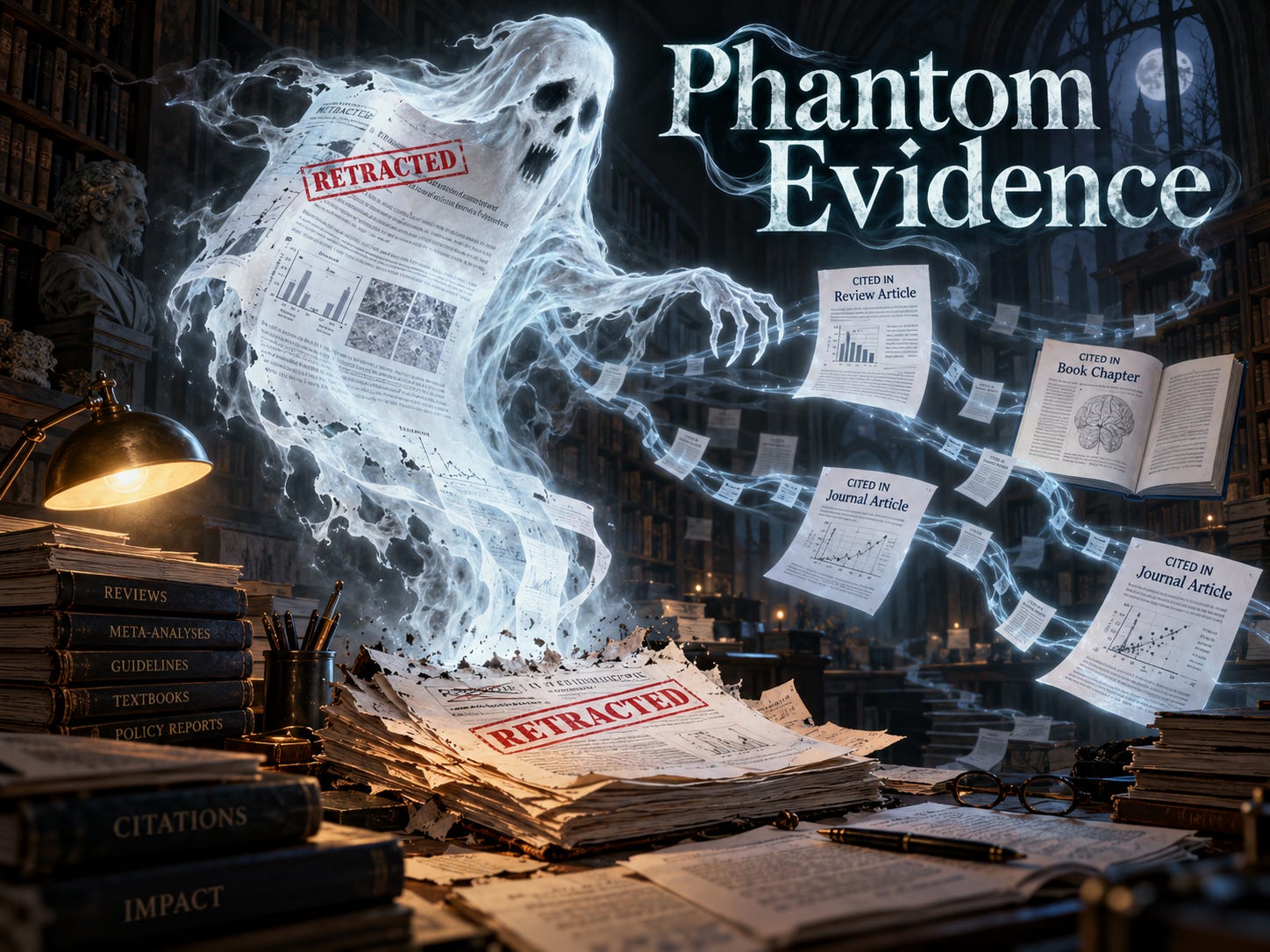
Phantom Evidence is a piece of evidence that has been invalidated or retracted, yet continues to be cited as though it were still alive.
There are plenty of good examples, but we’ll focus on a 2005 paper published in CHEST. Matsuyama et al performed a randomized clinical trial and reported that omega-3 fatty acids were beneficial for patients with chronic obstructive pulmonary disease (COPD), by reducing several biomarkers of inflammation and reducing patient symptoms. The authors concluded “…we propose that nutritional treatment with n-3 PUFA-rich diet might be an effective and safe anti-inflammatory practical strategy for treating COPD.”
There was just one problem… The paper was retracted by CHEST in 2008 after data falsification came to light:

Perhaps it seems just a BIT problematic that the data were made up… Most of us would agree that fake data isn’t actually scientific evidence. And, the RetractionWatch database reveals Matsuyama has had 17 papers retracted for similar reasons.
So, one might assume that a retraction would mean the end of that paper contributing to the scientific literature. But, that’s not the case.
Matsuyama’s retracted findings are a phantom, continuing to haunt introduction and discussion sections of the peer-review literature, masquerading as real evidence.
In fact, Matsuyama’s paper got cited so much that other researchers made a case study out of it. In 2020, Schneider et al published an analysis of how many times Matsuyama’s paper was cited since its retraction in 2008. They found the article had been cited 112 times since the time of retraction… and 96% of those citing papers do not mention it being retracted. In other words, it’s not being cited as an example of bad science (only 5 of those 112 papers cited it for that reason), while the remaining 107 papers failed to acknowledge the retraction. Even more troubling, 44 of those papers discussed the original methods or results without warning readers that the underlying data had been falsified.
Phantoms Can Easily Escape Detection
But, the problem doesn’t stop there. Of those 107 papers, 44 of them provided a detailed description of Matsuyama’s methods or results - meaning they seemingly valued or applied the details of a paper rooted in data falsification (again, without mentioning it was retracted). Those 44 papers were cited 1400+ times. These include multiple review articles and book chapters citing Matsuyama’s work (see network diagram, below). Those are then cited in multiple government documents, which reference the review articles / chapters, which reference Matsuyama.
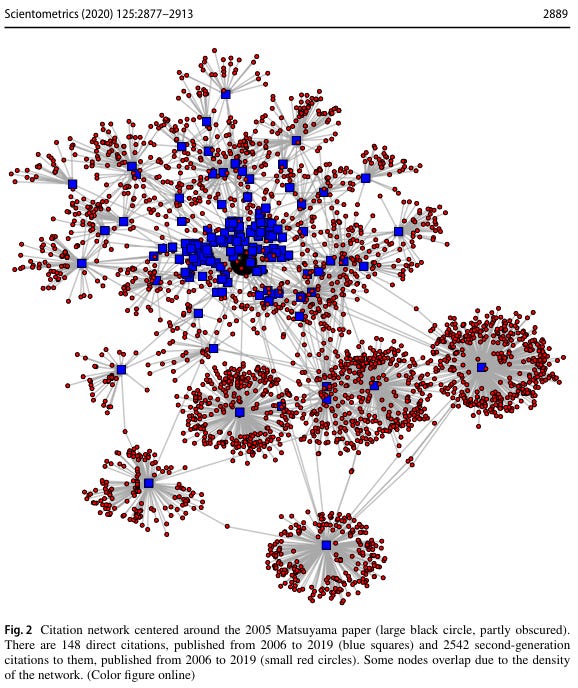
So, the haunting can become multigenerational - not only being directly cited, but laundered through secondary sources, which then get cited separately:
Paper A reports fabricated evidence. It eventually gets retracted.
Paper B cites Paper A (either before or after retraction), and summarizes the result.
Paper C cites Paper B.
By the time paper D repeats the claim, nobody involved may have any reason to suspect that somewhere within that citation chain lurks a study that was retracted years ago. The phantom persists, no longer needing the body that originally brought it to life.
This is one of the reasons phantom evidence is so persistent - retracting the source is not the same as exorcising its descendants.
Exposing a Phantom Doesn’t Chase It Away
Since Schneider et al’s analysis was published in 2020, I decided to search myself to see how the Matsuyama paper has performed since then. Indeed, its apparition is still being sighted - it’s been cited 29 times since 2021, according to Google scholar.
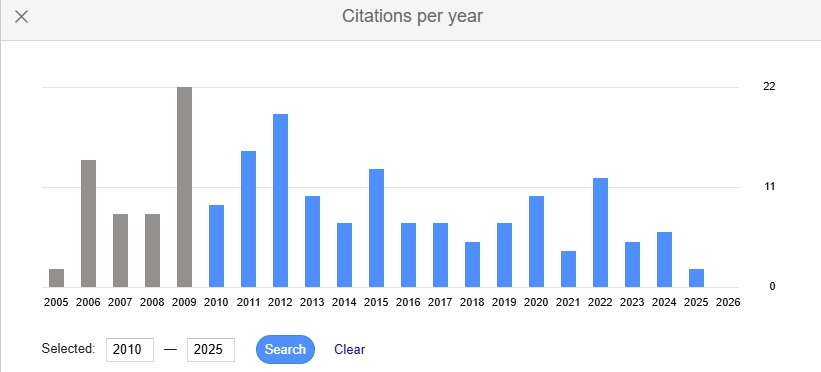
Not all of these represent an affirmative citation (as an example, a 2022 meta-analysis in British Journal of Nutrition excluded it because it was retracted)… But some clearly do use it as supportive evidence. For example, here is that retracted study haunting the introduction of a 2022 paper in the European Journal of Pharmacology:

There’s so much more to phantom evidence… Not all cases behave like Matsuyama’s (and Schneider and all discuss this) - an especially high-profile retraction can result in fewer citations. But, more importantly scientific information systems that are remarkably good at distributing the original paper may remarkably bad at notifying others that the original paper is dead.
So, retraction can kill a paper. It does not necessarily kill the evidence that escaped from it.
The Phantom Test
Is evidence that should be dead still living, continuing to be cited in the scientific literature?
A Phantom does not require the broader claim to be wrong. Twenty studies might support a conclusion, five of which have subsequently been invalidated (e.g., retraction, serious errors, major methodological flaws, inappropriate conclusions). If those five continue to be cited as legitimate evidence, they are still Phantoms. The question isn't whether the conclusion survives without them… It's why dead evidence is still being used to support it.
Zombie Research
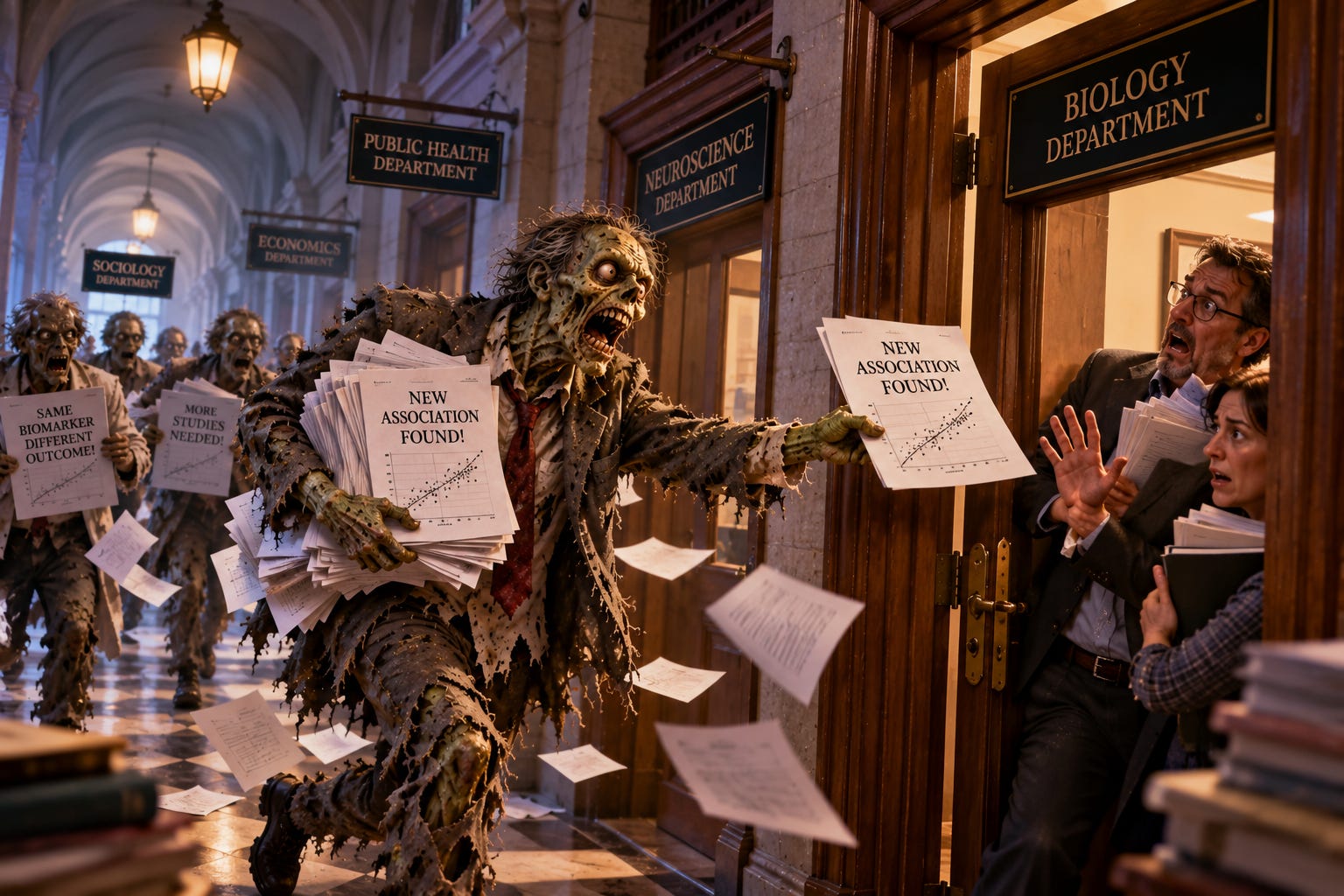
A Zombie is a research theme that keeps reproducing and infecting new disciplines, even after the premise that first animated it has come under serious doubt
Zombie research is not simply a hypothesis that turned out to be wrong - that happens constantly and is part of healthy science… Rather, the Zombie appears when a research program continues shambling through the literature despite substantial problems with the premise that originally animated it.
One of my favorites is something known as 2D:4D digit ratio, or simply put “digit ratio.” According to proponents, the ratio between our index finger (second digit, “2D”) and our ring finger (fourth digit, “4D”) is an indicator of how much testosterone we were exposed to while we were in the womb. A longer ring finger supposedly indicates more testosterone exposure.
(When I tell people about this, most people look at their hands… but that’s beside the point.)
In other words, the premise is that measuring your fingers when you are 40 years old can provide useful information on your hormonal exposure before you were born. That either sounds biologically fascinating or completely implausible.
Patient Zero
Modern digit ratio research can be traced to a 1998 paper published in the journal Human Reproduction. We can think of this as “patient zero” - or perhaps the original zombie. Professor John Manning reported relationships between 2D:4D, sperm counts, and circulating reproductive hormones and proposed that the sex difference in digit ratio was established before birth.
To put it bluntly, the statistics for the paper are… messy.